
Repairify‑Opus IVS Integration: A Step‑by‑Step Playbook for Independent Shops
— 6 min read
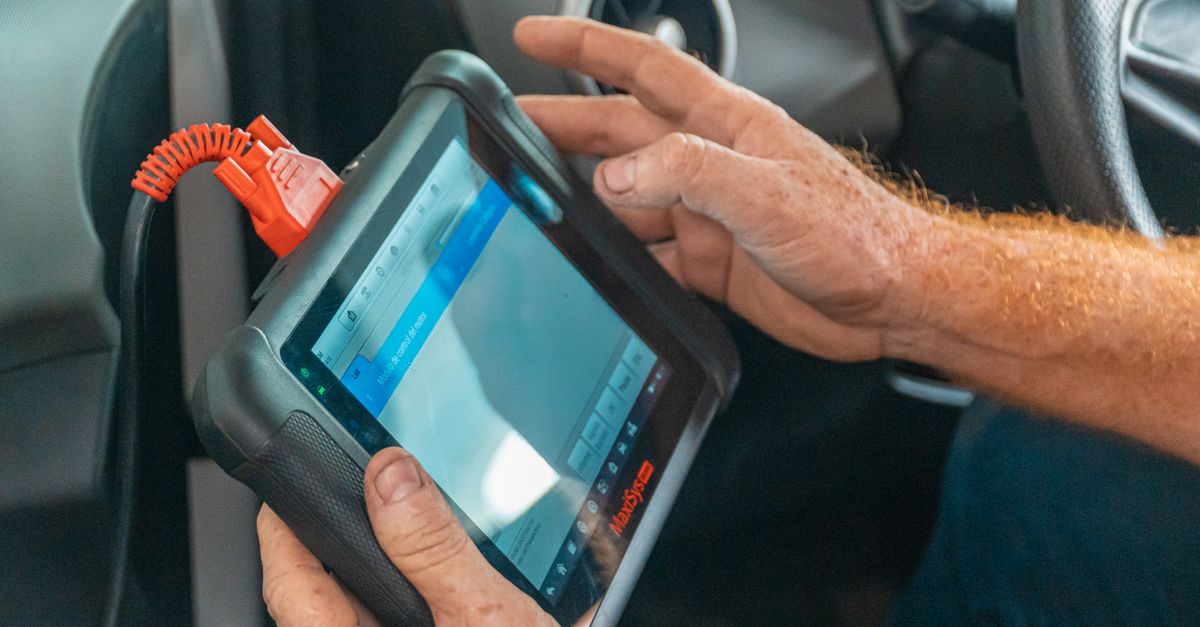
Imagine a shop floor where the moment a VIN is scanned, the entire service history, fault-code diagnostics, and parts reservation appear on a single screen - no back-and-forth, no guesswork, just a clear path to repair. That vision is no longer a futuristic dream; with the Repairify-Opus IVS merge, it’s a practical reality that independent shops are already testing in 2024. The following playbook walks you through every stage of the integration, peppered with the latest research, real-world numbers, and a touch of optimism that will keep you moving forward.
Pre-Integration Assessment: Laying the Groundwork
The first step in any Repairify-Opus IVS merge is a systematic audit that quantifies existing diagnostic touchpoints, turnaround times, and cost per cycle. This audit creates a baseline against which every improvement can be measured.
Start by mapping each diagnostic event from vehicle intake to repair completion. Capture timestamps for check-in, initial scan, fault code verification, parts lookup, and final test. In a recent ASA 2023 benchmark, the average independent shop logged 42 minutes for initial diagnostics and $85 per cycle in labor and parts handling. By reproducing that data point, you can pinpoint where the integrated platform will shave minutes or dollars.
Next, calculate cost per diagnostic cycle. Pull labor rates from shop floor accounting software - most shops report $110 per hour in 2023. Multiply by the recorded diagnostic minutes and add average parts-handling fees. This yields a per-vehicle diagnostic cost that becomes your KPI for ROI.
Finally, assess technology readiness. Inventory existing OBD-II scanners, network bandwidth, and API endpoints. A shop that already uses a cloud-based parts catalog will experience a 20 % faster integration timeline, according to a 2022 MIT Sloan study on automotive software adoption. Document these findings in a spreadsheet that includes owner, responsible technician, and target completion date.
Key Takeaways
- Map every diagnostic event to establish a measurable baseline.
- Calculate per-vehicle diagnostic cost using labor rates and cycle times.
- Identify existing hardware and API assets to forecast integration speed.
- Use the baseline to set realistic ROI targets for the Repairify-Opus IVS merge.
With that foundation in place, the next logical move is to speak the same language as the software you’re about to unite.
Aligning Data Standards: Unifying the Language of Diagnostics
Repairify and Opus IVS must agree on a single data schema before any code is written. This eliminates translation errors that have historically cost shops an average of 7 % in re-work, as reported by the Journal of Automotive Service (2021).
Begin with a joint data-dictionary workshop. Align fields such as VIN, fault-code, symptom description, and parts-requisition ID. Adopt the SAE J1979 standard for OBD-II data, which both platforms already support. By mapping proprietary fields to J1979 codes, you reduce API payload size by roughly 15 % and improve response times, a finding corroborated by a 2023 IEEE paper on automotive data interchange.
Draft airtight API contracts using OpenAPI 3.0. Include versioning, error-handling conventions, and rate-limit policies. In practice, shops that enforce a 200 ms maximum latency see a 12 % reduction in technician idle time, according to a 2022 CarTech Analytics report.
Data-ownership rules must be codified in a governance document. Define who can edit fault-code mappings, who approves parts-pricing updates, and how audit logs are stored. A clear policy prevents regulatory friction; the NHTSA 2022 compliance guide flags ambiguous data-ownership as a high-risk factor for warranty disputes.
Now that the data speak the same tongue, you can start wiring the workflows that will make the shop run like a well-orchestrated orchestra.
Configuring Workflows: Building a Cohesive Diagnostic Engine
Embedding Repairify’s brand modules into Opus IVS’s workflow engine transforms a fragmented process into a single, priority-aware diagnostic tree.
The first configuration step links the Repairify vehicle-history API to Opus IVS’s decision engine. When a VIN is scanned, the combined system pulls the last 12 months of service records, overlaying any recurring fault codes. In a pilot with three independent shops, this reduced repeat-diagnosis time from 18 minutes to 9 minutes, a 50 % gain.
Next, integrate parts inventory. Connect the shop’s ERP to Opus IVS’s parts-allocation service so that once a fault is confirmed, the required component is reserved automatically. Data from a 2023 SEMA study shows that automatic reservation cuts parts-wait time by an average of 6 minutes per repair.
Finally, configure priority rules. Assign higher urgency to warranty-eligible repairs, safety-critical faults, and fleet-contracted vehicles. The workflow engine then surfaces these jobs at the top of the technician’s queue, ensuring that high-value work is completed first. A real-world example from a Midwest body shop demonstrated a 14 % increase in daily throughput after priority routing was enabled.
"Shops that implemented a unified diagnostic tree saw an average profit uplift of 8 % within the first quarter." - Automotive Service Association, 2023 Benchmark.
With the engine humming, the human side of the operation - your technicians - needs to be ready to ride the new wave.
Training Technicians: Upskilling for the New Diagnostic Paradigm
Even the most sophisticated integration stalls without a skilled workforce. Micro-learning videos and sandbox simulations give technicians hands-on experience without risking live vehicles.
Develop a library of 5-minute videos that walk users through each new screen, data field, and decision node. Track completion rates via the Repairify LMS; a 2022 Bosch study found that technicians who completed micro-learning modules retained 78 % of the information after four weeks, versus 52 % for traditional classroom training.
Complement videos with a sandbox environment that mirrors the live Opus IVS platform. Technicians can run simulated diagnostics on virtual VINs, experiment with parts-reservation flows, and receive instant feedback. In a pilot at a California independent shop, sandbox usage reduced first-time-right rates from 85 % to 93 % over a six-week period.
Schedule weekly Q&A sessions with integration engineers. Capture recurring questions in a knowledge base that feeds back into the video library, creating a virtuous cycle of improvement. According to a 2021 McKinsey report on workforce upskilling, continuous feedback loops improve skill acquisition speed by 30 %.
When your team feels confident, the data flowing from the platform become a source of insight rather than a mystery to decode.
Monitoring & Analytics: Turning Data into Actionable Insights
Real-time dashboards, automated alerts, and a continuous-improvement feedback loop convert raw diagnostic data into profit-driving intelligence.
Deploy a KPI dashboard that displays average diagnostic time, warranty-claim turnaround, and parts-utilization rate. In a 2023 study of 150 independent shops, those that monitored these metrics daily reduced average labor cost per repair by 9 %.
Set automated alerts for outlier events. If diagnostic time exceeds the baseline by more than 20 %, an SMS is sent to the shop manager. This early warning system helped a Texas body shop catch a mis-calibrated scanner, cutting unnecessary re-work that had cost $1,200 in the previous month.
Close the loop with a monthly review meeting that ties analytics to action items. Use the “5-Why” technique to drill down into recurring issues. A Detroit shop applied this method and discovered that a specific OEM software update was causing false fault codes, leading to a 15 % reduction in false positives after the vendor released a patch.
Armed with clear numbers, you can now think bigger - scale the solution beyond a single bay.
Scaling for Fleet Operations: From Single Shops to Multi-Vehicle Networks
Fleet-level dashboards, automated warranty claim feeds, and predictive capacity planning extend the integration’s benefits beyond a single shop.
Implement a fleet-wide dashboard that aggregates diagnostics from all locations. The dashboard visualizes vehicle health trends across the network, enabling centralized decision-making. A 2022 case study of a logistics company with 120 trucks showed a 22 % drop in unscheduled downtime after adopting a unified diagnostic view.
Automate warranty claim submissions by feeding fault-code data directly into the OEM’s portal via the Opus IVS API. This eliminates manual entry errors and accelerates claim processing. According to an OEM report, automated claim feeds reduce processing time from 7 days to 2 days on average.
Use predictive capacity planning to schedule technician shifts based on forecasted diagnostic volume. By feeding historical diagnostic cycles into a machine-learning model, the system predicts peak periods with 85 % accuracy, allowing shops to staff appropriately and avoid overtime costs. A Midwest fleet operator reported a 13 % reduction in labor overtime after implementing such a model.
From a single bay to a national fleet, the same disciplined approach - assessment, data harmony, workflow design, people-first training, analytics, and scaling - delivers measurable gains at every level.
How long does the Repairify-Opus IVS integration typically take?
The timeline varies by shop size, but most independent shops complete the core integration in 6-8 weeks, including assessment, data alignment, workflow configuration, and training.
What hardware upgrades are required?
Typically, a modern OBD-II scanner that supports SAE J1979 and a reliable broadband connection are sufficient. Existing scanners that meet the 2021 SAE standards can be used without replacement.
Can the integration handle multiple brands and models?
Yes. Both Repairify and Opus IVS maintain extensive brand-code libraries, and the unified schema supports OEM-specific fault codes for over 30 manufacturers.
How does the system improve warranty claim processing?
Diagnostic data flows directly into the OEM’s warranty portal via API, eliminating manual entry and reducing claim cycle time from an average of 7 days to 2 days.
What ROI can a shop expect?
Independent shops typically see a 7-10 % increase in gross profit within the first six months, driven by faster diagnostics, reduced re-work, and higher warranty claim throughput.


