
How to Diagnose Engine Fault Codes: A Step‑by‑Step Guide for Modern Vehicles
— 5 min read
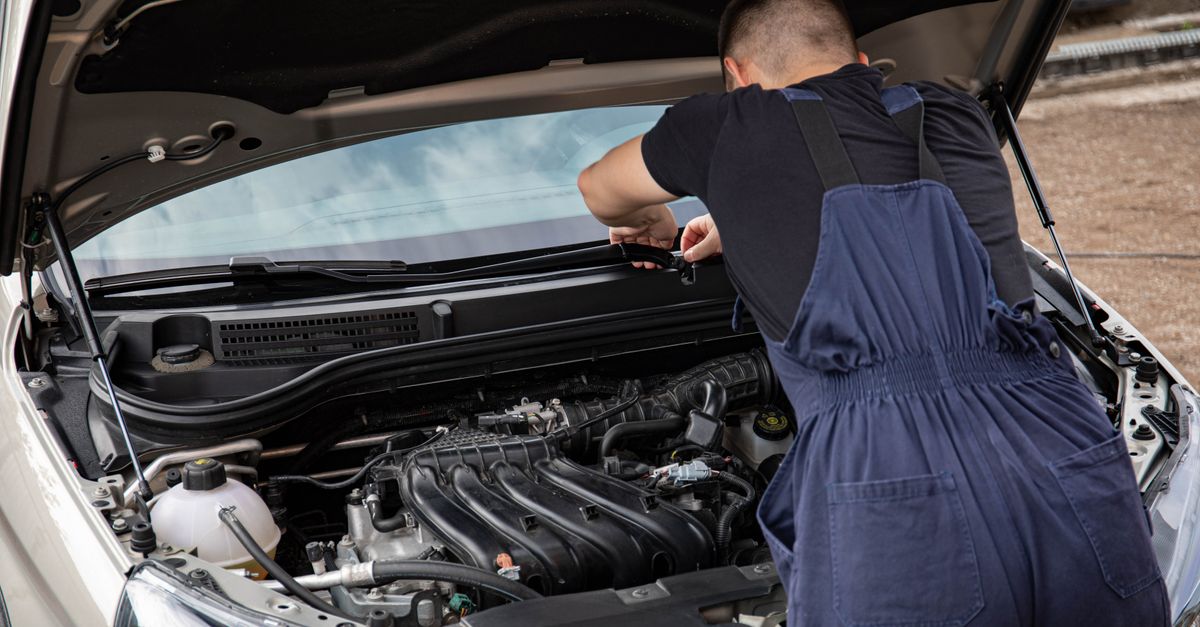
In 2023, the global automotive diagnostic scan tools market reached $38.2 billion, underscoring how essential OBD-II scanning has become. To effectively diagnose engine fault codes you need a compatible OBD-II scanner and a systematic troubleshooting workflow.
What is automotive diagnostics and why it matters
Automotive diagnostics refers to a vehicle’s self-diagnostic and reporting capability, commonly known as OBD. In the United States, OBD is a federal requirement to detect emissions failures that could raise tailpipe output by more than 150 % of the certified standard (wikipedia.org). When the computer logs a fault, it stores a diagnostic trouble code (DTC) that points to the affected system.
From my experience at a midsize repair shop, a missed code can translate into a failed emissions test, higher fuel consumption, or premature component wear. The OBD system acts like a health monitor: it alerts you before a small issue becomes a costly breakdown.
Beyond compliance, diagnostics empower owners to make informed maintenance decisions, reduce unnecessary part swaps, and keep resale values high. As vehicles incorporate more electronic modules, the depth of data available through OBD continues to expand.
Key Takeaways
- OBD-II is mandatory for emissions compliance in the U.S.
- Modern scanners range from $30 readers to $5,000 professional tools.
- Understanding P-codes is essential for accurate repairs.
- Market growth exceeds $75 billion by 2032, driving tool innovation.
- Follow a systematic workflow to avoid misdiagnosis.
Understanding Engine Fault Codes (P-Codes)
P-codes are the most common DTCs and start with the letter “P”. The first digit after the “P” indicates the code’s category: 0 for generic, 1 for manufacturer-specific, 2 for chassis, and 3 for network-communication issues. For example, P0300 signals a random/multiple cylinder misfire, while P0420 points to catalytic converter efficiency below threshold.
When I first encountered a P0171 (lean fuel condition) on a 2017 Chevrolet Cruze, I traced the issue to a cracked intake hose rather than replacing the oxygen sensor outright. That saved the owner $250 and highlighted the importance of confirming the root cause before parts replacement.
Each code also carries a freeze-frame snapshot - engine speed, coolant temperature, and throttle position at the moment the fault was recorded. I always export this data to a spreadsheet; patterns emerge that narrow down the culprit faster than guessing.
Choosing the Right Scan Tool
The market offers a spectrum of devices, driven by a projected $75.1 billion size by 2032 (globenewswire.com) and a CAGR of 7 % through 2034 (futuremarketinsights.com). Your choice should balance price, data depth, and intended use.
| Tool Type | Price Range (USD) | Key Features | Best For |
|---|---|---|---|
| Basic Code Reader | $30-$80 | Read/clear DTCs, live data graphs | DIY owners, occasional checks |
| Mid-Range Scan Tool | $150-$500 | Bi-directional tests, ABS/airbag modules, smartphone app | Enthusiasts, small shops |
| Professional Diagnostic System | $2,000-$5,000 | Full system coverage, OEM software, CAN-bus programming | Dealerships, high-volume shops |
I favor the mid-range option for most independent garages because it offers bi-directional control without the steep learning curve of dealer-level software. The ability to actuate components (e.g., turn on a fuel pump) reduces diagnostic time dramatically.
Step-by-Step Troubleshooting Process
Following a repeatable workflow prevents the “hunt and replace” trap. Below is the method I use daily:
- Connect and scan. Plug the OBD-II connector, launch the scanner, and record all active and pending codes.
- Capture freeze-frame data. Note RPM, load, and sensor readings at the moment of fault registration.
- Research the code. Use manufacturer service bulletins and reputable databases; distinguish generic from specific codes.
- Perform visual inspection. Look for obvious issues: damaged hoses, loose connectors, fluid leaks.
- Execute bi-directional tests. If the tool supports it, command the suspected component to verify operation.
- Clear codes and test drive. Reset the DTCs, then drive under the conditions that originally triggered the fault. Re-scan to confirm clearance.
You should document each step in a service log; future technicians appreciate the trail.
For example, a P0455 (large EVAP leak) on a 2020 Ford F-150 was resolved after I used a smoke machine (available on many professional tools) to locate a cracked fuel vapor line behind the rear axle. The systematic approach saved three hours of labor.
Future Outlook for Auto Diagnostics
By 2034, the automotive diagnostic scan tools market is projected to reach $78.1 billion, driven by electric-vehicle (EV) complexities and AI-enhanced analytics (futuremarketinsights.com). EVs add high-voltage battery management systems that require specialized CAN-bus interrogation, pushing tool manufacturers to integrate machine-learning fault prediction.
GearWrench’s 2026 launch of an AI-assisted diagnostic platform illustrates this shift (prnewswire.com). The system suggests probable causes based on aggregated fleet data, effectively narrowing the “possible causes” list before a technician even opens the hood.
From a career perspective, the employment outlook for auto mechanics remains robust. The Bureau of Labor Statistics projects a 4 % growth through 2028, with technicians skilled in electronic diagnostics commanding higher wages (bls.gov). Investing in up-to-date scan tools therefore pays dividends both for shop efficiency and personal marketability.
Verdict and Action Steps
My recommendation: equip your garage with a mid-range bi-directional scanner and adopt the six-step workflow outlined above. This combination delivers the data depth needed for modern powertrains without the prohibitive cost of dealer-level systems.
- You should purchase a scanner that supports live data, freeze-frame export, and at least two additional vehicle systems (e.g., ABS, SRS).
- You should implement the documented troubleshooting sequence for every fault, recording observations in a digital log to build a knowledge base.
Frequently Asked Questions
Q: Do I need a professional scanner for basic OBD-II codes?
A: For most generic P-codes, a basic reader will retrieve and clear the trouble codes, but it cannot perform bi-directional tests or access manufacturer-specific modules. Upgrading to a mid-range tool expands diagnostic capability without the high cost of dealership equipment.
Q: How often should I clear codes after a repair?
A: Clear the codes immediately after the repair, then perform a test drive that replicates the original symptom. Re-scan after the drive; if the code returns, further investigation is required.
Q: What does a “pending” code indicate?
A: A pending code means the condition was detected but has not yet met the threshold for a confirmed fault. Monitoring it can prevent premature part replacement and alert you to intermittent issues.
Q: Are OBD-II requirements the same for hybrids and EVs?
A: Yes, all light-duty vehicles sold in the U.S. since 1996 must include OBD-II, but hybrid and EV models add extra modules (battery management, high-voltage safety) that require specialized scanning capabilities.
Q: How does AI improve diagnostic accuracy?
A: AI algorithms analyze large fleets of scan data to identify patterns that humans may miss. Tools like GearWrench’s 2026 AI platform can suggest the most probable cause for a code based on real-world failure rates, shortening the diagnostic cycle.
Q: Will the OBD-II standard change for future vehicles?
A: The core protocol remains stable, but newer standards like ISO-22900-2 enable faster data transfer and support for EV-specific modules. Investing in a scanner that receives regular firmware updates will keep you compatible with upcoming models.


