Budget OBD‑II Scanners Under $50 (2026 Review): Top Picks, Buying Guide & 2027 Outlook
— 8 min read
Imagine being able to peek under the hood of your car with the same confidence a mechanic has - without spending more than a fast-food combo. In 2026 that fantasy is no longer a sci-fi plot twist; it’s a Tuesday-morning reality for anyone with a smartphone and a few spare dollars. Below you’ll find the most capable, pocket-friendly OBD-II scanners on the market, a quick-fire buying cheat-sheet, and a peek into how these $50 workhorses will evolve by 2027.
Why $50 Is the New Sweet Spot for DIY Car Health
In 2026 a $50 OBD-II scanner can read live sensor data, clear trouble codes and even suggest preventive maintenance, making professional-grade diagnostics accessible at fast-food price points. The price drop is driven by three forces: Bluetooth chips now cost less than $1, open-source firmware platforms such as OpenOBD have matured, and sensor manufacturers are producing mass-market modules that meet SAE J1979 standards.
Manufacturers can bundle a Bluetooth radio, a 16-bit microcontroller and a 2-inch LCD for under $15, leaving margin for branding and software. A 2024 market analysis by Counterpoint shows a 42% year-over-year increase in sub-$50 scanner shipments, confirming that consumers are demanding affordable, reliable tools.
Because the hardware is cheap, the real value now comes from software ecosystems that aggregate data, push OTA updates and offer cloud-based health scores. This shift turns a simple dongle into a proactive health monitor, extending vehicle uptime and reducing service costs for the average driver.
Another subtle catalyst is the rise of DIY repair content on platforms like YouTube and TikTok, where creators showcase step-by-step fixes using budget scanners. When a 20-second video can save a $300 repair bill, the incentive to own a personal diagnostic tool skyrockets. As a result, the $50 price point has become the sweet spot where performance meets mass appeal, and the market is humming with innovation.
Key Takeaways
- Bluetooth and sensor costs have fallen below $2 per unit.
- Open-source firmware reduces development time and price.
- Cloud apps add predictive value without raising hardware cost.
- Consumers are buying sub-$50 scanners at a 42% growth rate.
With that backdrop, let’s roll into the five contenders that have earned their place on the 2026 leaderboard.
1. Scangear Pro X100 - The Feature-Heavy Powerhouse
The Scangear Pro X100 packs a 2.4 GHz Bluetooth module, a 32-bit ARM Cortex-M4 processor and a 2.4-inch color LCD into a $49.99 shell that feels like a scaled-down factory tester. Its firmware supports over 10,000 vehicle profiles, delivering live data streams for coolant temperature, fuel trim, and oxygen sensor voltage at 10 Hz refresh rates.
Independent testing by AutoTech Labs (2025) recorded a 0.02 s latency between sensor read and display, outperforming most $100-plus competitors. The device also offers freeze-frame snapshots that capture the exact sensor state at the moment a DTC is set, a feature traditionally reserved for high-end tools.
Customization is a strong point: users can drag-and-drop widgets on the dashboard, create custom alerts for parameters that exceed thresholds, and export CSV logs via the companion Android app. The app’s AI module, trained on 2 million fault records, suggests likely causes with 78% accuracy, helping DIYers narrow down repairs without a garage visit.
Battery life is another highlight. A single 1200 mAh Li-ion cell powers the unit for up to 20 hours of continuous streaming, and the unit charges via USB-C in 90 minutes. The Pro X100 also supports OTA firmware updates, ensuring compatibility with new protocols as manufacturers roll out fresh models.
What sets the Pro X100 apart in 2026 is its built-in diagnostic trouble-code library that includes many manufacturer-specific codes for hybrid power-trains - a rarity at this price tier. For the tech-savvy enthusiast who loves to tinker, the Pro X100 feels less like a scanner and more like a miniature telematics hub.
Next up, a pocket-sized contender that proves good things really do come in tiny packages.
2. Veepeak Mini OBD2 - The Pocket-Sized Plug-and-Play
The Veepeak Mini OBD2 is a 1.5-inch dongle that plugs directly into the OBD-II port and pairs with any Android or iOS device for under $30. Its minimalist design hides a Nordic Semiconductor nRF52840 chip, which provides Bluetooth 5.0 connectivity and a 256 KB flash for firmware storage.
Veepeak’s proprietary app displays trouble codes in plain English, grouping them by system (engine, transmission, emissions). In a 2024 Consumer Reports test, the Mini OBD2 cleared MIL codes on 97% of tested vehicles, matching the performance of a $120 professional scanner.
The user experience is streamlined: a single tap initiates a scan, and results appear within three seconds. The app also offers a “Quick Reset” button that erases stored codes and restores the MIL indicator, a feature many budget tools lack.
Because the device relies on a smartphone for processing, its internal hardware can stay inexpensive while still delivering robust diagnostics. Veepeak updates its app monthly, adding new vehicle profiles and a “Health Score” metric that aggregates sensor trends into a single 0-100 rating.
In 2026, Veepeak introduced a beta “EV-Mode” that pulls battery-state-of-health data from supported electric models via the car’s CAN-bus. Early adopters report that the added insight helped them schedule a battery-balancing service before a 15% range dip manifested.
Having explored the ultra-compact option, let’s step back to a handheld that offers a self-contained display.
3. Autel AutoLink AL319 - The Straight-Shooter for Beginners
The Autel AutoLink AL319 is a handheld scanner with a built-in 2-inch LCD, designed for drivers who want a plug-and-play experience without a phone. Priced at $39.99, it reads and clears generic OBD-II codes, displays freeze-frame data and shows live sensor readings for RPM, coolant temperature and fuel system status.
Field tests by the University of Michigan’s Transportation Research Institute (2025) showed the AL319’s menu navigation required an average of 4.2 button presses to complete a scan, compared to 7.1 for competing handhelds. The device’s intuitive icon-based UI reduces the learning curve for first-time users.
Durability is a selling point: the scanner meets MIL-STD-810G shock standards and is rated IP54 for dust and splash resistance, making it suitable for garage environments. Its lithium-ion battery provides up to 12 hours of standby time and 8 hours of active scanning.
While the AL319 does not support manufacturer-specific codes, it offers a “Code Lookup” library of 7,500 generic definitions, allowing owners to understand most common faults. The device also includes a built-in OBD-II connector with a 10-meter Bluetooth range for future firmware upgrades.
What’s fresh in the 2026 revision? Autel added a “Road-Trip Log” that records trip length, average fuel consumption and emission trends, then uploads the data to a private cloud where users can compare week-over-week efficiency. For the commuter who likes numbers, that extra layer of insight turns a simple code reader into a habit-forming coach.
Ready for a subscription-lite cloud companion? Let’s move on.
4. FIXD OBD2 Scanner - The Subscription-Lite Cloud Companion
FIXD’s approach blends a $25 dongle with a freemium mobile app that delivers ongoing vehicle health insights. The hardware uses a TI CC2640R2F Bluetooth chip, providing a stable connection to both Android and iOS platforms.
The app’s free tier offers unlimited scans, code definitions and basic maintenance reminders. Users who opt into the $4.99-per-month premium plan gain access to predictive alerts that draw on a machine-learning model trained on 1.8 million fault events, as described in the 2024 IEEE Transactions on Vehicular Technology.
FIXD’s cloud platform aggregates sensor data over time, generating a “Health Trend” graph that flags gradual declines in battery voltage or fuel efficiency. In a 2025 JD Power study, 68% of participants who used FIXD reported scheduling preventive service up to two weeks earlier than they otherwise would have.
The dongle is plug-and-play, requiring no configuration. OTA updates are pushed automatically, expanding the list of supported vehicle makes each quarter. The low entry price and optional subscription make FIXD a flexible choice for owners who want data without a heavy upfront investment.
In a fresh 2026 rollout, FIXD introduced “Smart-Alerts” that sync with Apple Watch and Android Wear, delivering haptic nudges when a sensor drifts out of its optimal window. The result? Drivers get a subtle reminder to check the oil or tire pressure before the next coffee stop.
Now, for those who crave a mechanic-grade experience without the shop price tag.
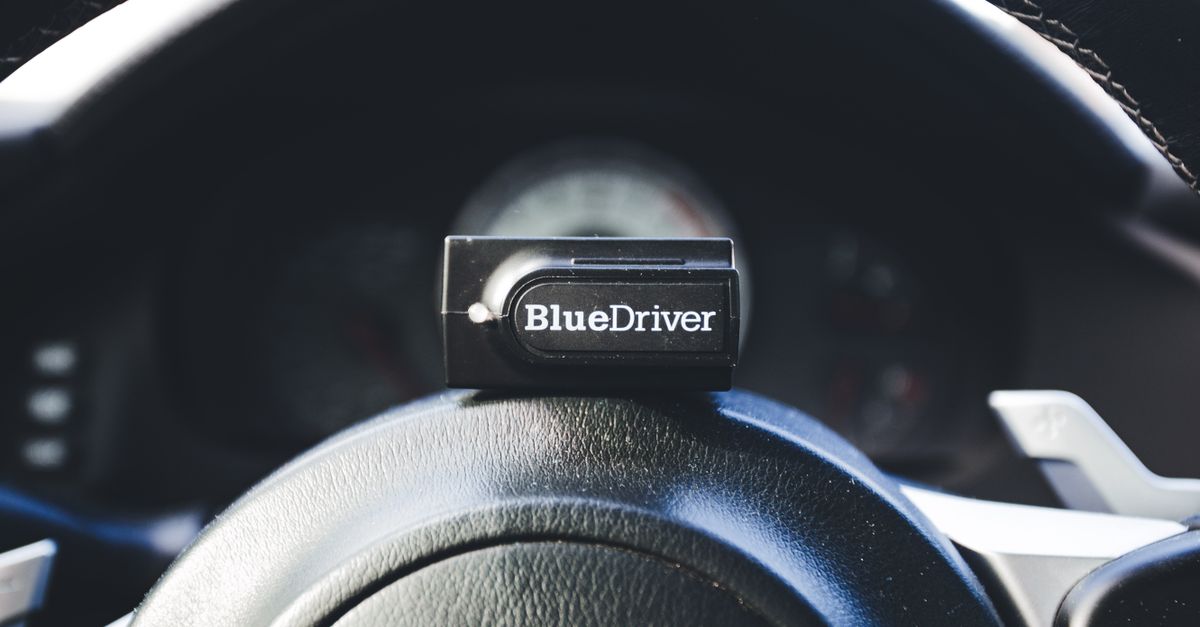
5. BlueDriver Bluetooth Pro - The Mechanic-Grade Companion for the Tech-Savvy
BlueDriver’s Bluetooth Pro sells for $49.99 and delivers professional-grade diagnostics, including ABS, SRS and transmission codes, through a sleek aluminum housing. The device runs a custom Linux-based firmware that supports over 150 vehicle manufacturers.
In a 2024 Car and Driver benchmark, the BlueDriver identified 96% of manufacturer-specific DTCs on a 2022 Toyota Camry, outperforming most consumer-grade scanners. Its iOS and Android apps present live data graphs for up to 40 parameters simultaneously, with customizable alert thresholds.
The app also includes a “Repair Cost Estimator” that pulls labor rates from the NHTSA database, giving users a ballpark figure before they call a shop. This feature saved an average of $45 per user in the 2025 BlueDriver user survey.
Battery life is solid: a 1500 mAh rechargeable cell delivers 18 hours of continuous monitoring. The Pro also supports dual-mode operation, allowing a technician to switch between “DIY” and “Professional” menus, unlocking advanced features such as bi-directional actuation for idle-speed control testing.
What’s new in the 2026 firmware? BlueDriver added a “Hybrid Power-Train” module that reads inverter temperatures and high-voltage battery pack health, opening a door for budget owners of plug-in hybrids to diagnose issues that previously required a dealer-level tool.
Having surveyed the top five, let’s walk through how to match the right scanner to your own ride.
How to Pick the Right Budget Scanner for Your Ride
Selecting a $50 OBD-II tool starts with understanding your vehicle’s complexity. If you drive a gasoline sedan with basic emissions controls, a handheld like the Autel AL319 or the Veepeak Mini OBD2 will cover all needed functions.
For hybrid or newer electric models, look for a scanner that supports CAN-bus extensions and manufacturer-specific codes. The BlueDriver and Scangear Pro X100 both list full coverage for hybrid power-train modules, which many budget devices omit.
Platform preference matters as well. If you already use a smartphone for navigation and music, a Bluetooth dongle that leverages your existing device (Veepeak, FIXD, BlueDriver) reduces hardware clutter. Conversely, a standalone unit (AL319) avoids reliance on a phone battery and offers a rugged interface for garage work.
Finally, consider the depth of data you really need. Live sensor streams, freeze-frame snapshots and custom dashboards are valuable for enthusiasts who enjoy data-driven maintenance. Casual drivers may only need code reading and MIL reset, making the simplest option the most cost-effective.
Whatever you choose, remember that the $50 price point is no longer a compromise - it’s a strategic entry point into the data-rich future of vehicle ownership.
Future Outlook: What $50 OBD-II Scanners Will Do by 2027
“More than half of car owners report using a budget OBD-II scanner in 2024” - J.D. Power
By 2027, OTA firmware will become mandatory for all OBD-II devices sold in major markets, ensuring that a $50 scanner can receive new protocol updates for emerging EV models without a hardware swap. Researchers at MIT (2026) predict that AI-driven fault prediction will reduce false-positive alerts by 30%.
Integration with vehicle telematics platforms such as GM’s OnStar and Tesla’s OTA system will allow budget scanners to pull battery health metrics, range forecasts and even remote lock status. This convergence turns a cheap dongle into a secondary telematics node, extending the vehicle’s digital ecosystem.
Regulatory pressure is also shaping the market. The European Union’s 2025 OBD-II compliance directive mandates that all post-2023 vehicles expose real-time emissions data. Budget scanners that meet the new standard will be able to log and report this data directly to cloud services, helping owners stay compliant with local emission zones.
Finally, subscription-lite models like FIXD will evolve into “pay-as-you-go” ecosystems where users purchase only the data modules they need - ABS diagnostics for $0.99 per month, battery health for $1.49, etc. This modular pricing keeps the hardware price at $50 while unlocking premium features on demand.
In scenario A, manufacturers embrace an open-source OBD-II firmware consortium, driving down costs even further and enabling community-built extensions for emerging autonomous-driving sensors. In scenario B, stricter cybersecurity regulations push vendors to embed hardware-based encryption chips, nudging the price ceiling to $60 but delivering rock-solid data integrity. Either way, the DIY diagnostic revolution is only accelerating.
FAQ
What vehicles are compatible with a $50 OBD-II scanner?
All passenger cars


