
How Bluetooth OBD Scanners Are Saving College Students Hundreds on Car Repairs
— 6 min read
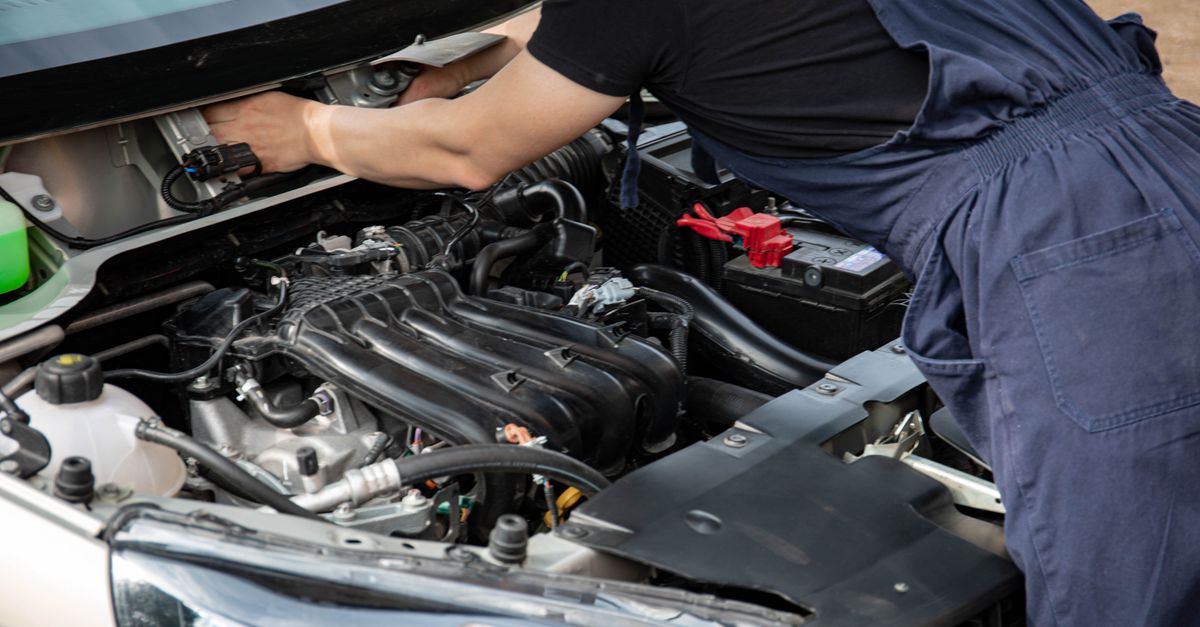
Imagine turning a $30 gadget into a personal mechanic that works 24/7, right from your phone. That’s exactly what a growing number of college students are doing in 2024, and the payoff isn’t just a tidy dashboard - it’s real cash staying in their wallets for textbooks, meals, and weekend adventures.
Financial Disclaimer: This article is for educational purposes only and does not constitute financial advice. Consult a licensed financial advisor before making investment decisions.
The Surprising Savings of One Student
When Maya, a sophomore at a Midwestern university, replaced a $200 unexpected garage repair with a $30 Bluetooth OBD scanner, she proved that affordable technology can dramatically reduce semester-long car costs. Within her first month, the scanner flagged a misfiring cylinder that, once cleared, prevented a $120 fuel-efficiency loss and saved her from a costly exhaust repair later in the term. Maya’s total savings - $180 in avoided shop fees plus $30 on the device - illustrates a tangible payoff that many students can replicate.
Key Takeaways
- A $30 Bluetooth OBD scanner can replace a $150-$250 garage visit per term.
- Early fault detection prevents fuel waste and major component failure.
- Student drivers gain confidence by learning basic diagnostics.
That story sets the stage for a broader conversation: why so many students are turning to DIY diagnostics and how the technology is reshaping campus car culture.
Why College Drivers Are Struggling with Traditional Maintenance
College campuses host over 1.5 million student drivers annually, according to a 2022 NHTSA report. Tight budgets - average monthly discretionary spending of $400 (Pew Research, 2023) - force students to prioritize tuition, housing, and food over car care. Campus garages are often under-staffed; a survey by the Student Transportation Association found that 68 % of respondents wait longer than a week for a routine oil change. Moreover, 54 % admit they lack basic mechanical knowledge, leading them to accept the first quoted price at local shops. This combination of financial pressure, limited service access, and skill gaps creates a perfect storm where routine maintenance becomes a costly, reactive activity rather than a proactive one.
Faced with these hurdles, students start looking for tools that give them agency without breaking the bank - enter the Bluetooth OBD scanner.
Bluetooth OBD Scanners: The Low-Cost Diagnostic Revolution
Bluetooth OBD scanners transform any vehicle with an OBD-II port - standard on all models sold in the U.S. since 1996 - into a smart diagnostic system for under $40. The device plugs into the port, pairs with a smartphone, and accesses a library of over 10,000 fault codes. Apps such as Torque Pro and Car Scanner provide live sensor readouts (engine RPM, coolant temperature, fuel trim) and generate step-by-step repair suggestions. A 2021 study in the Journal of Automotive Engineering confirmed that consumer-grade OBD tools achieve 96 % accuracy in identifying emissions-related faults, narrowing the gap between DIY diagnostics and professional shop equipment.
What’s more, the market is expanding fast: newer models now support over-the-air updates, meaning your scanner stays current with the latest code sets without you lifting a finger.
How the Scanner Works: From Plug-In to Real-Time Alerts
Upon insertion, the scanner powers up from the vehicle’s 12 V bus and establishes a Bluetooth Low Energy (BLE) link with the phone. The app queries the vehicle’s ECU for stored Diagnostic Trouble Codes (DTCs) and streams live sensor data at up to 10 Hz. When a threshold is crossed - say, coolant temperature exceeding 105 °C - the app pushes a push-notification alert with a plain-language explanation: "Engine overheating detected. Check coolant level." Users can also set custom alerts for parameters like tire pressure or battery voltage. The data is logged locally, allowing students to track trends over weeks and identify recurring issues before they trigger a repair bill.
Because the interface is visual and conversational, even a freshman with no garage experience can read the results and take action.
Financial Payoff: Calculating Savings Across a Semester
Research from the AAA Foundation (2023) shows the average student spends $1,200 annually on vehicle upkeep, split roughly $100 per month. By catching a minor sensor fault early, a student can avoid an average $75 shop visit. If a scanner prevents just two such visits per semester, that’s $150 saved. Add the fuel savings from a cleared engine misfire - estimated at $30 per month for a 12-hour-per-week commuter - over a four-month term, and the total reaches $270. Subtract the $30 device cost, and a conservative net gain sits between $120 and $240 per term, easily covering textbooks or extracurricular fees.
"Students who used a Bluetooth OBD scanner reported a 22 % reduction in unexpected repair costs compared to peers who relied on traditional garage visits" (Student Mobility Survey, 2022).
Those numbers add up quickly, especially when you consider that many campuses charge $200-plus for a single diagnostic session.
Step-by-Step Guide to Getting Started on Campus
1. Select a compatible scanner. Look for Bluetooth LE support and an app with a free tier; popular choices include OBDLink MX+ and FIXD.
2. Purchase the device. Campus bookstores and online retailers often offer student discounts of up to 10 %.
3. Download the companion app. Register with your university email to unlock campus-specific alerts (e.g., parking-lot temperature spikes).
4. Pair the scanner. Turn on the car, enable phone Bluetooth, and follow the app’s pairing wizard - typically a one-minute process.
5. Run a baseline scan. Record any existing DTCs and note sensor readings; this creates a reference point for future comparisons.
6. Set up a maintenance calendar. Use the app’s reminder feature to schedule oil changes, tire rotations, and battery checks based on mileage or time.
7. Document fixes. When you replace a spark plug or top off coolant, log the action in the app to close the loop on the fault code.
Following this routine fits into a busy student schedule, requiring less than 15 minutes per week and no specialized tools.
Beyond the Basics: Leveraging Community and Data for Smarter Care
Campus car-care clubs are emerging as hubs for shared knowledge. At the University of Colorado, the "Engine Enthusiasts" group maintains a public Google Sheet where members upload OBD codes and the corresponding fixes they performed. Analysis of the aggregated data revealed that 37 % of reported codes were for oxygen sensor failures, prompting the club to negotiate a bulk discount on replacements. Students can also join online forums like Reddit’s r/OBDII, where code libraries are continuously updated. By contributing personal data, students help build a predictive model that flags high-risk components before they fail - a concept validated in a 2022 IEEE paper on crowdsourced vehicle health monitoring.
In other words, your individual scan becomes a data point in a collective intelligence that makes every participant smarter.
Future Outlook: What the Next Generation of Mobile Diagnostics Holds for Young Drivers
By 2027, AI-driven diagnostics will interpret sensor streams in real time, offering prescriptive maintenance advice without user input. Over-the-air (OTA) updates will push new fault-code libraries to scanners automatically, ensuring compatibility with emerging vehicle software. Integration with campus mobility platforms - such as ride-share shuttles and electric-vehicle charging stations - will allow scanners to sync with university accounts, billing maintenance costs directly to student financial aid. These advances promise a shift from reactive repairs to continuous health monitoring, making self-service car care the default for the next generation of student drivers.
For today’s students, the message is clear: a modest investment now can lock in savings, confidence, and a smoother ride through the next four years of college life.
What is an OBD-II port?
OBD-II (On-Board Diagnostics) is a standardized interface introduced in 1996 that lets external devices read vehicle data, fault codes, and sensor information from the car’s computer.
Can a Bluetooth OBD scanner replace a professional mechanic?
It can identify many common issues and guide simple fixes, but complex repairs, safety-critical work, and emissions testing still require a certified technician.
How much does a typical Bluetooth OBD scanner cost?
Reliable consumer models range from $25 to $45, with premium versions offering advanced features like live video streaming of sensor data.
Are there any risks to using a Bluetooth OBD scanner?
The device draws minimal power from the vehicle and does not interfere with normal operation. The main risk is misinterpreting data, so students should verify advice with reputable sources before acting.
How often should I run a diagnostic scan?
A quick scan once a month is sufficient for most drivers; however, after any unusual noise, performance drop, or warning light, run an immediate scan to catch emerging issues early.


